The memory of my first encounter with real Fettuccine Alfredo is still vivid in my mind—a golden afternoon in Rome, meandering through the bustling Trastevere district. The cobbled streets were perfumed with the scent of roasting garlic and simmering sauces, luring locals and visitors alike into shadowy trattorias. I had come not just for the sights, but to experience the Italian ritual of la tavola—the table, where stories and traditions are passed down through food.
I wandered into a small osteria, where the owner, Signora Lucia, presided over the kitchen with the authority of a seasoned artist. Her hands moved with practiced grace, tossing ribbons of fresh fettuccine into a pot of bubbling water. She smiled, noticing my curiosity, and beckoned me closer. There, beside her, I learned the secrets of a dish both simple and sublime. Alfredo, she explained, was born in Rome—a humble comfort for a beloved wife that soon captured the city’s heart.
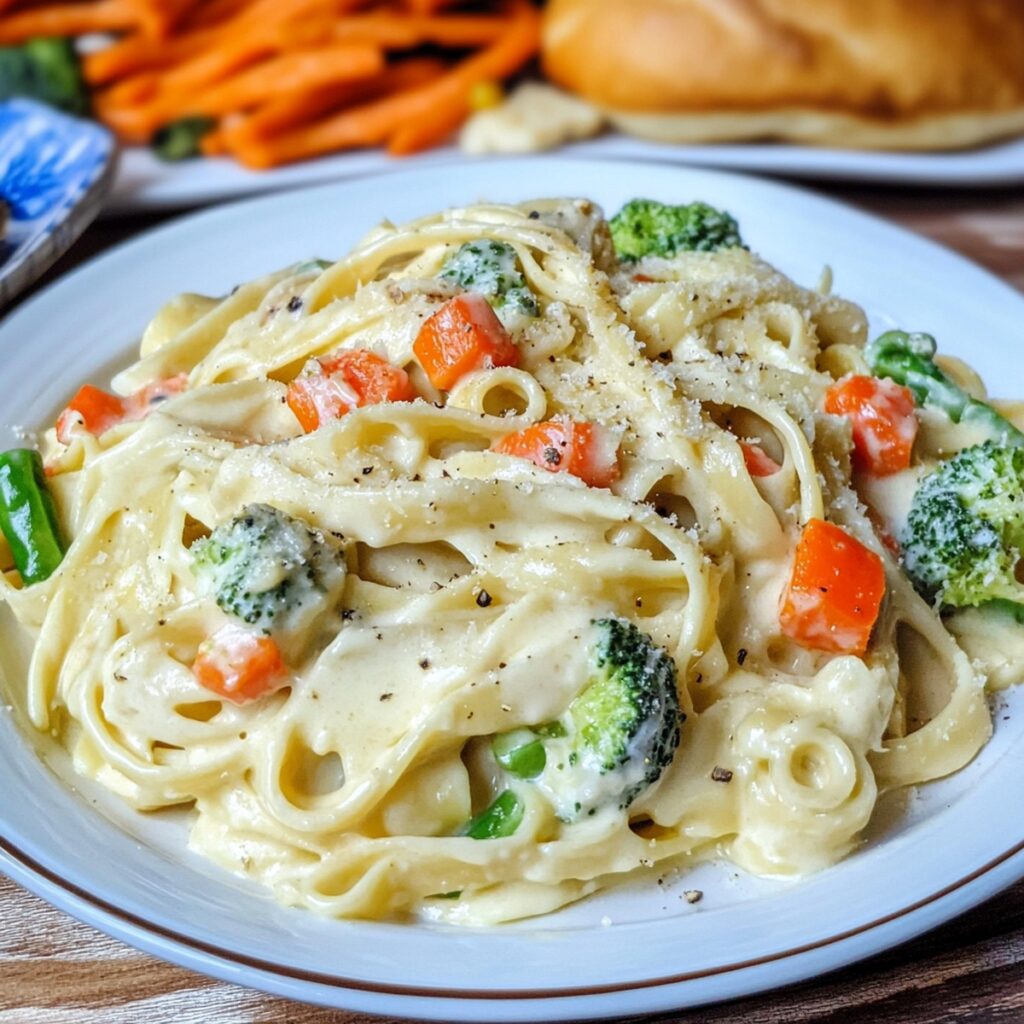
But this was no ordinary Alfredo. Lucia folded in an array of seasonal vegetables, a tradition in her family to celebrate market abundance and add color to the creamy sauce. As the sauce thickened, its aroma melded with the sweetness of sautéed onions and the earthy tang of mushrooms. A splash of sherry, a dusting of nutmeg, shavings of Parmesan—the kitchen became a symphony of flavors. When I finally twirled my fork through the glossy, vegetable-studded tangle, I tasted not just the dish, but the spirit of Rome: welcoming, inventive, alive with old and new.
This Veggie Fettuccine Alfredo recipe is inspired by that afternoon, bridging tradition with a dash of personal discovery. Bring a taste of Rome to your kitchen, and let every forkful tell its own story.
A Taste of Italy: How to Make Authentic Veggie Fettuccine Alfredo
Click here to get printable version
The Traveler’s Pantry: Authentic Ingredients
- 1 pound fettuccine noodles (fresh if possible, or high-quality dried)
- 2 tablespoons extra virgin olive oil
- 2 small onions, chopped
- 1 1/2 teaspoons granulated sugar
- 1 medium bell pepper, chopped
- 2-3 cloves garlic, coarsely chopped
- 3 medium carrots, julienned or thinly sliced
- 1 small can mushrooms (with their liquid) or fresh cremini mushrooms
- 1/4 cup water (or vegetable stock)
- 1/2 teaspoon chicken bouillon (optional for depth of flavor)
- 1/4 cup unsalted butter
- 1/4 – 1/2 cup all-purpose flour
- 2 cups half and half (or a blend of whole milk and cream)
- 1/3 cup dry cooking sherry
- Pinch of ground nutmeg
- 1/2 cup Parmigiano-Reggiano cheese, freshly grated
- Salt and fresh-cracked black pepper to taste
Bringing the World to Your Kitchen: The Method
- Prepare the fettuccine noodles according to package instructions. Reserve some of the pasta water.
- In a skillet, heat olive oil over medium heat. Sauté onions for 3 minutes. Add sugar to help caramelize the onions and cook 2 more minutes.
- Add the bell pepper and garlic. Sauté for 5 minutes until softened and lightly browned.
- Stir in carrots, mushrooms (with their juice), water, and optional bouillon. Cover and cook 8 minutes, until carrots are tender. Remove lid and let excess liquid evaporate.
- In another large skillet, melt butter over medium heat. Stir in flour to form a paste; cook 2-3 minutes.
- Gradually whisk in the half and half, stirring until smooth and thickened.
- Add cooking sherry, nutmeg, salt, and pepper. Stir well, then add Parmesan until melted and incorporated.
- Fold in cooked vegetables. Thin the sauce with reserved pasta water if needed.
- Add cooked fettuccine, toss to coat, and serve immediately with extra Parmesan and fresh herbs.
Finding Authentic Ingredients (and What to Use If You Can’t)
While Italian markets brim with fresh fettuccine and Parmigiano-Reggiano, finding these may be trickier abroad. For the pasta, look for artisanal or bronze-cut dried fettuccine for that ideal texture. If you can’t find half and half, mix equal parts whole milk and heavy cream. Fresh mushrooms can replace canned for deeper flavor, and a dash of white wine can stand in for cooking sherry. For Parmesan, opt for real Parmigiano-Reggiano if possible; otherwise, a good aged Italian cheese will do. Remember, the heart of this dish is in using the best, freshest ingredients you can find.
How It’s Traditionally Served in Italy
In Rome, Alfredo is never doused in sauce but lightly coated, allowing the fresh pasta to shine. It’s typically served as a primo (first course), perhaps alongside a simple salad or seasonal vegetables. If veggies are included, as in family-run trattorias, they’ll be market-fresh and cooked just until tender. A dusting of Parmesan and a drizzle of extra virgin olive oil is classic. To really eat like a Roman, serve with crusty bread and a glass of crisp white wine.
Storing This Dish Like a Local
Fettuccine Alfredo is best enjoyed fresh, but Italians know how to make use of leftovers. Store any remaining pasta in an airtight container in the fridge for up to two days. When reheating, do so gently over low heat, adding a splash of milk or reserved pasta water to bring back creaminess. Avoid microwaving for too long, as it can make the sauce separate. In Rome, leftovers might even be baked with a sprinkle of cheese for a quick gratin.
Tips for a Truly Authentic Flavor
Authenticity lies in the details: use freshly grated Parmigiano-Reggiano, avoid overcooking the vegetables, and finish your sauce with a whisper of nutmeg—just enough to warm the flavors. Don’t be tempted to drown the pasta in sauce; instead, toss until each strand is lightly coated. Reserve some pasta water to adjust the consistency at the end, just like Italians do. And always taste as you go, adjusting salt and pepper for perfect balance.
Regional & Seasonal Variations of Veggie Fettuccine Alfredo
While the classic Alfredo hails from Rome, Italian cooks adapt it to the bounty of each season and region. In spring, peas and asparagus might appear; in autumn, wild mushrooms and pumpkin add depth. Some regions substitute local cheeses, such as Grana Padano, or use tagliatelle instead of fettuccine. There are even coastal versions that incorporate artichokes or zucchini blossoms at their seasonal peak, making every plate a reflection of Italy’s rich agricultural heritage.
Your Questions About Italian Cuisine:
- What is the origin story of Fettuccine Alfredo?
Fettuccine Alfredo originated in early 20th-century Rome. It was created by Alfredo di Lelio for his wife, who struggled with appetite during pregnancy. The dish gained international fame when Hollywood actors fell in love with it and spread the word back in the United States. - Can I substitute other vegetables in this recipe and still keep it authentic?
Italian home cooks often adapt Alfredo to whatever is fresh and in season. While the core sauce remains classic, you can substitute vegetables like zucchini, spinach, or asparagus without losing authenticity—just use what’s available and high quality. - Which brand of Parmigiano-Reggiano should I use?
Look for cheese labeled “Parmigiano-Reggiano DOP” from Italy. Brands like Zanetti and Auricchio are widely exported and trusted for quality. Grate it fresh for best results. - Is it traditional to add sherry or bouillon to Alfredo?
Classic Alfredo uses just butter, Parmesan, and pasta water, but many regional or modern Italian recipes add a splash of wine or broth for extra depth. It’s a delicious, creative twist that honors Italian adaptability. - How can I make this dish vegetarian?
Simply omit the chicken bouillon or substitute with a vegetable bouillon cube. All other ingredients are naturally vegetarian, making this dish easy to adapt. - What’s the best way to achieve that silky, creamy sauce?
The key is to whisk the half and half in slowly and simmer just until thickened, never boiling. Finish with fresh Parmesan and use reserved pasta water to reach the perfect consistency before tossing with noodles.


Veggie Fettuccine Alfredo
Equipment
- Skillet
- large skillet
Ingredients
- 1 pound cooked fettuccine noodles reserve pasta water
- 2 tablespoons olive oil
- 2 small onions chopped
- 1.5 teaspoons granulated sugar
- 1 medium bell pepper chopped
- 2-3 cloves garlic coarsely chopped
- 3 medium carrots julienned or sliced thin
- 1 small can mushrooms with their juice
- 1/4 cup water
- 1/2 teaspoon chicken bouillon optional
- 1/4 cup butter
- 1/4 - 1/2 cup all-purpose flour
- 2 cups half and half
- 1/3 cup cooking sherry
- 1 pinch ground nutmeg
- 1/2 cup Parmesan cheese
- to taste Salt
- to taste Pepper
Instructions
Cooking the Veggies:
- In a skillet over medium heat, warm the olive oil. Add chopped onions and sauté until they start to soften, about 3 minutes. Sprinkle in sugar to aid in caramelizing.
- After 2 additional minutes, blend in the chopped bell pepper and garlic. Continue cooking for another 5 minutes until the mixture is softened and lightly golden.
- Stir in the sliced carrots, mushrooms (including their juice), and water, adding chicken bouillon if desired. Cover and simmer for around 8 minutes until carrots are tender.
- Remove the lid and allow the mixture to continue cooking for a bit to evaporate some excess liquid.
Making the Sauce:
- In a separate large skillet, melt the butter over medium heat. Add flour to create a roux, cooking for 2-3 minutes.
- Gradually whisk in the half and half, ensuring there are no lumps in the sauce.
- Incorporate the cooking sherry, nutmeg, salt, and pepper, continuing to stir until the sauce reaches a thick consistency. Then, mix in the Parmesan cheese for a creamy finish.
- Combine the sautéed vegetables with the sauce. If the mixture appears too dense, add some reserved pasta water to adjust the consistency.
- Finally, add the cooked fettuccine noodles, mixing well to coat everything thoroughly. This dish pairs wonderfully with crusty garlic bread and a fresh salad.